


The star has handed over the complete sum of his £25,000 honor prize money to the trust for venues, which functions to protect the Britain's small live music spots.
He was awarded the award on mid-October as his third album his work was chosen as the top album of the past year.
The musician has decided to donate the funds to the Music Venues Trust, in appreciation of the essential function local spots had in his beginning days.
"As an artist would not have achieved my current career if it wasn't for all the shows I performed around the area, and further afield, when I was just getting going," remarked Sam Fender. "These venues are renowned, but they are in difficulty."
Beginning in 2023, more than 150 of these locations have permanently closed – about one-sixth of the total UK scene.
Over the past year, well-known musicians like the band Pulp, Coldplay, Katy Perry and Ed Sheeran have all supported the trust in its efforts to keep the scene afloat, by including a minor surcharge to their ticket prices, which benefits smaller concert halls.
Fender also took part, generating in excess of £100,000 on his recent tour to help thirty-eight small stages across Britain.
The donation helped locations that were facing possible closure due to difficulties caused by floods, fire incidents and bereavements, as well as regulatory hurdles, legal disputes and noise complaints.
Additional spaces obtained financial assistance in upgrading amenities and technical equipment that directly benefitted artists and fans.
"The notion that funds from concerts in big venues supports the local stages, where it kicks off for performers like me, is just common sense," the star has said.
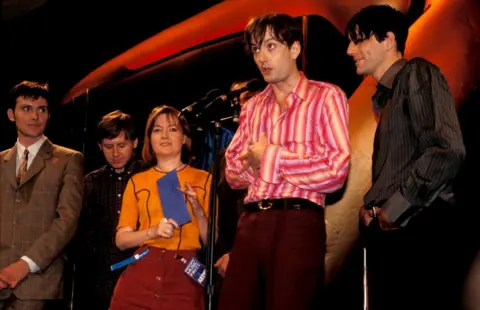
He is among several artists to contribute his award prize money to charitable organizations.
When Pulp won the prize in the mid-90s for their release Different Class, vocalist Cocker announced that the band would contribute their winnings to the non-profit War Child.
In 2002, musician the artist shared her prize among multiple charities, such as the children's charity and a Sickle Cell charity.
"And I gave a £1,000 to Highgate Newtown, to their classes, because I did gymnastics when I was growing up and they required new equipment," she shared with the media.
Two years ago, they contributed their prize money to the community center that supported their group, alongside other grassroots music organisations.
Also the 1994 recipients they gave their winnings to a charity for MS after a friend was diagnosed the disease.
"Receiving the award was sufficient," remarked singer the singer. "The money was the extra but we didn't need the bonus, because we had the main prize. So our winning affected another person's life."
Recently, the trust announced it had rescued a couple of grassroots venues in south-east England, by placing them under community ownership.
The Joiners in the city and the second in that location were acquired under the public acquisition scheme, which is supported by the arts council and music fans who purchase "ownership units" in the buildings.
